Word histories, with the evidence in view
Follow a word’s forms, meanings and dates. These five guides show how to check a history, keep uncertain steps visible and find a source for the claim you want to understand.

Start with one claim
A practical method for checking a proposed origin, with a reusable evidence record.
Read the research guide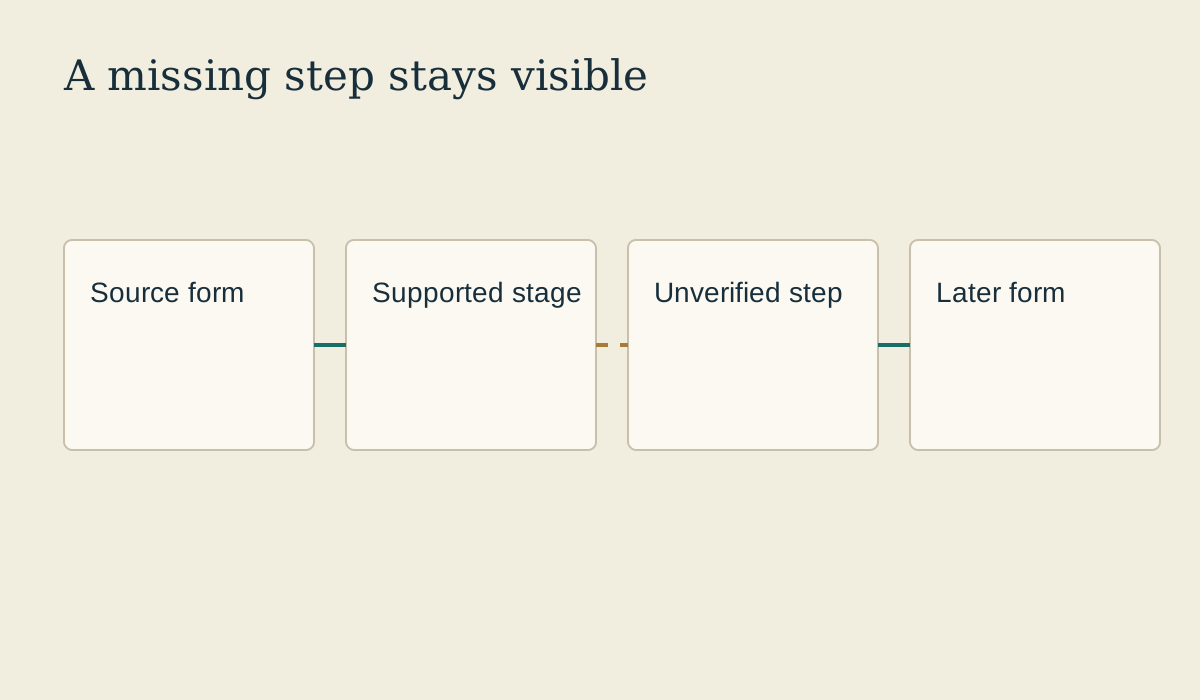
- Source form
- Supported stage
- Unverified step
- Later form

Which relationship do you mean?
Separate borrowing, shared ancestry and a translation trap.
Read the guide
Read the meaning in context
Compare senses without pretending an older use disappeared overnight.
Read the guide
Put the date beside the sense
Understand what first known use tells you, and what needs another kind of evidence.
Read the guide
Check the story that sounds too neat
Distinguish recorded reshaping from an unsupported origin tale.
Read the guideA source is useful when it supports the particular claim
Open the entry or teaching reference, identify the claim it actually supports, and keep its qualifications attached.
- Merriam-Webster etymology conventionsBorrowing lines, related forms and the asterisk for reconstructed forms.
- Merriam-Webster first-use datesWhat a dictionary's earliest-use date covers, and what it leaves open.
- Essentials of Linguistics: reconstructing the pastUniversity textbook chapter on cognates, borrowing and shared ancestry.
- Essentials of Linguistics: semantic changeWidening, narrowing and how new senses can coexist with older ones.
- Cambridge Dictionary: false friendThe learner's term for a misleading resemblance in meaning.
- Oxford University Press Archives: OED slipsThe quotation evidence collected while compiling a historical dictionary.
Try a short history
Read ten source-linked examples, or use the browser lookup as a starting point for your own questions.
Explore the examples · Open the word lookup
Generated readings are provisional. Check their claims before relying on them.