
This guide introduces broadening, narrowing and meaning shifts, then shows how to read a short sense history. The examples illustrate the method; they are not a claim that every language or every word follows the same pattern.
What is semantic change?
Semantic change is change in meaning over time. Historical work asks how a form was understood in earlier contexts and how its later senses developed. That question is separate from a spelling change, a change in pronunciation or a borrowing into another language, although several changes can belong to one history.
The semantic-change chapter in Essentials of Linguistics offers an accessible academic introduction. It describes widening and narrowing and emphasizes that a newer meaning need not erase an older one. Keep that coexistence visible whenever you sketch a timeline.
Begin your own investigation with a sentence. “What did this word mean in this passage?” is usually easier to answer than “What did the word mean in the past?” A passage gives you a speaker, topic and context to inspect. The broad question risks treating many centuries and communities as one moment.
Broadening makes a sense less restricted
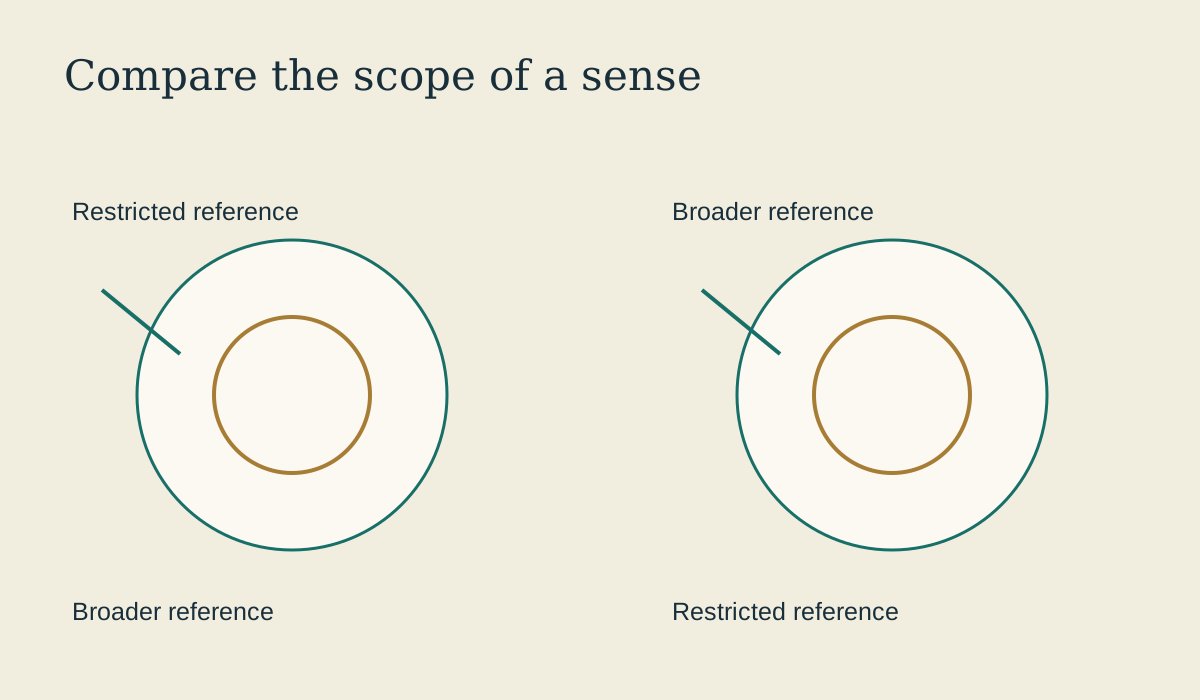
Broadening, also called widening, occurs when a word’s range of reference becomes more general. In a teaching diagram, an earlier smaller set can sit inside a later larger set. The circles represent the scope of a sense; they do not show how many people used it or how frequently.
Use this original exercise to understand the pattern without claiming a historical example. Imagine a community using the invented label ridgebag only for bags carried on a particular walking route. Later, speakers use it for any walking bag. That would illustrate broadening. The example is made up; it demonstrates the relationship between the two scopes.
When researching a real word, collect contexts that establish the relevant categories. One occurrence with a wider use can be a valuable lead, but it does not by itself tell you when that use became common. Avoid changing “recorded in this sense” into “everyone used it this way.”
- Restricted reference
- Broader reference
- Broader reference
- Restricted reference
Narrowing makes a sense more restricted
Narrowing moves in the other direction. A form once used for a larger category comes to refer to a more limited category. The Essentials chapter gives deer as an example, contrasting a broader earlier animal sense with the later familiar zoological range. The Merriam-Webster deer entry also shows why the short comparison is a summary: the scope developed further, and an archaic broad sense remains in the entry. Do not turn a useful narrowing example into a claim that the change was simple or irreversible.
For your own note, describe both scopes in ordinary language and cite the reference. If an older use survives in a phrase, specialist context or regional variety, keep that information beside the main comparison when your sources establish it. Do not make the timeline erase an exception simply to make the drawing tidy.
Our figure uses two outlined sets with text labels. A smaller later set does not indicate that the word became worse, less useful or less frequent. It only illustrates a restriction in reference.
A new sense can grow beside an older one
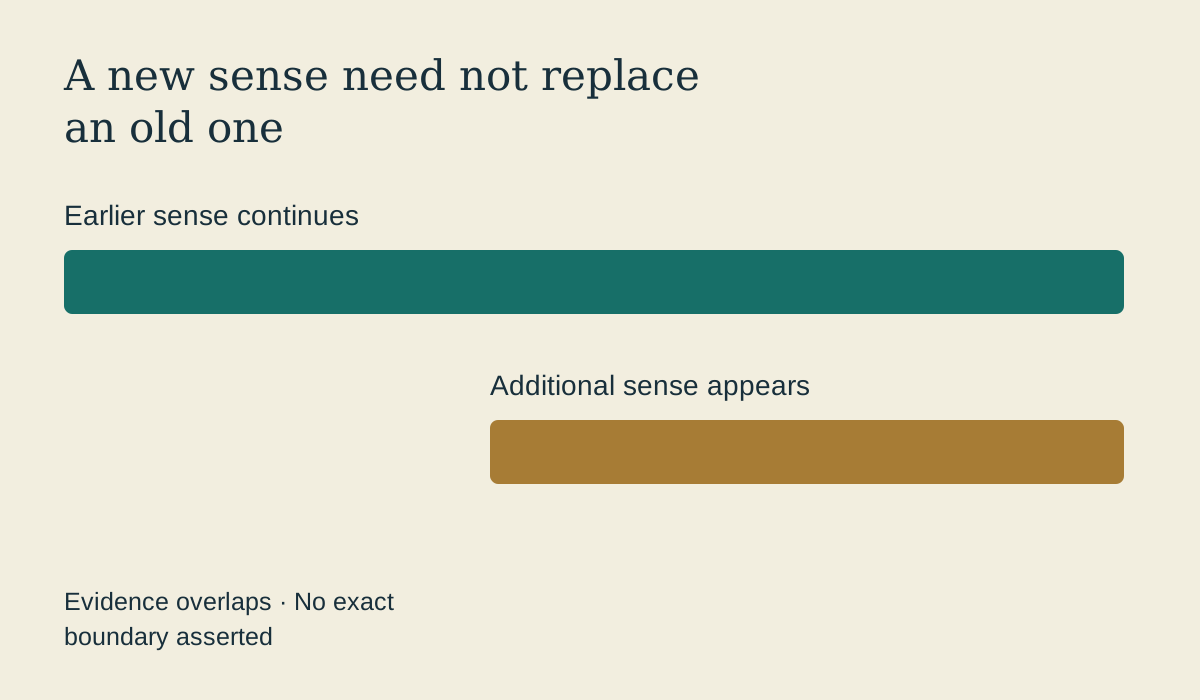
Readers often expect a clean replacement: one meaning ends and another begins. Actual evidence can be less tidy. A word may acquire an additional use while familiar uses continue. The correct diagram may be a branch or several overlapping bands, rather than one arrow between two boxes.
This matters when someone says, “The word really means…” and points to an older sense. A historical account can explain a word’s background, but a present-day usage question still needs present-day evidence. Check the meaning in the context you are reading or writing. Do not use an earlier definition as a shortcut for judging every current use.
An older quotation can also surprise you because it uses a sense that is now less familiar. Treat that surprise as a reason to investigate. Your current expectation is a starting point, rather than evidence of what an earlier writer intended.
Use a sense notebook instead of a single birthday
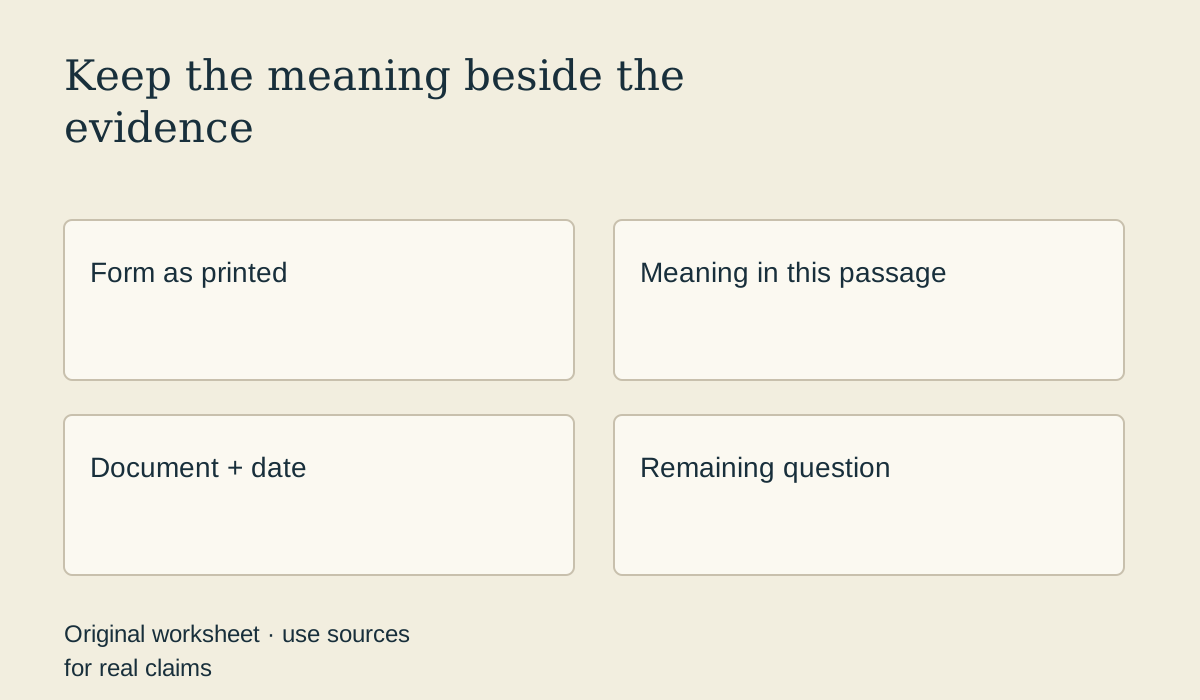
For each passage, keep the following original record:
| Record | Why it helps |
|---|---|
| Form as printed | Identifies spelling and any variation |
| Sentence or passage location | Lets you revisit the context without reproducing a long excerpt |
| Short sense description | Separates the use from other meanings |
| Work, edition and date | Identifies what the date actually belongs to |
| Reference or scan link | Makes the evidence inspectable |
| Remaining question | Keeps ambiguity visible |
Compare two or three records before drafting a story. A timeline becomes clearer when the sense labels are visible underneath the dates. If you cannot tell which sense an example illustrates, leave it out of a confident conclusion and explain what needs checking.
See first recorded use and word invention for the difference between a dated occurrence and a claim about when a word began. A date for one meaning should not be transferred to another.
- Earlier sense continues
- Additional sense appears
- Evidence overlaps
- No exact boundary asserted
Read a source-linked example carefully
The school example is a compact route through forms and a reported meaning development. Its Merriam-Webster entry describes earlier Greek senses connected with leisure and learning. Read that as the entry’s explanation of one history; do not generalize the example into a rule that all education words begin with leisure.
Ask two separate questions as you read. What forms does the entry connect? What meaning changes does it explain? A form sequence and a sense sequence can belong together, but they need different labels. A drawing that displays only spellings cannot teach the meaning development on its own.
For a fuller investigation, follow how to research a word origin. It helps you keep each claim attached to a reference and avoid adding attractive intermediate stages that the source did not name.
Watch for translation traps
Meaning change can make related forms less reliable as translations. Check current meanings in both languages before using one word as a substitute for another. Similar spelling and a supported historical relationship do not guarantee that the intended sense matches today.
The practical comparison is sentence to sentence. Identify the sense you want, the target language’s usage and any relevant register. Then keep the historical relationship in a separate note. Loanwords, cognates and false friends explains that separation in more detail.
Finish with a proportional conclusion
Write a sentence that names what you have actually checked. “These examples show an older and a newer sense in the cited contexts” is a smaller claim than “The meaning changed everywhere in this year.” The first may be supported by your notes; the second would need much more evidence.
Avoid giving a cause unless a suitable source supports it. A sequence of dates does not tell you why a community adopted a new sense. A vivid explanation about technology, social status or a famous person can become a folk story if it is added only because it seems plausible.
Word Says Hi generated readings can offer sense changes to investigate. They remain starting points. Use the curated examples for source-linked short histories, and keep your own sense record when you want to go further. The central habit is simple: keep the meaning attached to the evidence that shows it.
- Form as printed
- Meaning in this passage
- Document + date
- Remaining question
Sources and further reading
- Essentials of Linguistics: semantic change — widening, narrowing and coexistence of senses; the brief deer example.
- Merriam-Webster: deer — the fuller scope history and retained archaic sense.
- Merriam-Webster: school — the specific Greek-to-English example linked here.
- Merriam-Webster: first known use dates — interpreting dated evidence; expanded in the separate dates guide.
The invented ridgebag exercise and sense notebook are original teaching material. Sources consulted 28 September 2026.