
This distinction helps with three common questions: “Who invented this word?”, “How old is this meaning?” and “What is the oldest word?” The date is useful when you keep the question precise. It becomes misleading when it is asked to stand for a whole history.
What does first known use mean?
Merriam-Webster’s explanatory note on first-known-use dates explains that its dates identify the earliest known recorded uses in English. It also explains that a word may have been used earlier and that dates can change as earlier evidence is found. Read the date as the current entry’s evidence statement.
When you cite it, identify the source: “Merriam-Webster records…” is clearer than an unqualified “The word was born…” Keep the entry URL and consultation date. This lets another reader inspect the same record and understand which dictionary you used.
Different forms or senses can have different dates. An adjective entry and a noun entry on the same page need not date the same development. Do not move a date from one part of the page to another because the spelling looks identical.
Separate a word, a form and a sense
Write your target in a sentence before researching it. Are you dating a word in English, a particular spelling, a technical sense or an expression containing the word? Those distinctions determine which evidence is relevant.
Our orange example demonstrates why a short summary needs sense labels beside its dates. The cited entry gives distinct information within its noun and adjective records. Use the labels the source provides, rather than turning the earliest visible number into the date for every orange-related use.
Similarly, an older-looking spelling in a historical text may belong to the same continuing word, a borrowed form or a different entry. If you are unsure, record the form as printed and consult a suitable historical reference. Avoid deciding continuity from spelling resemblance alone.
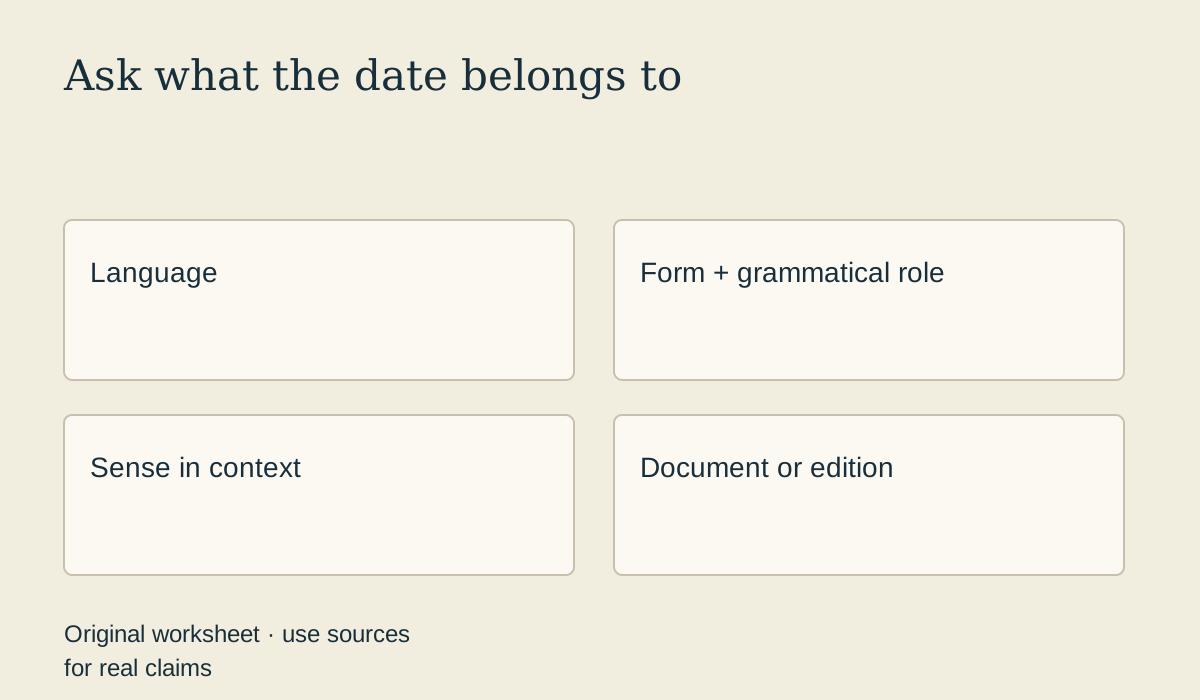
- Language
- Form + grammatical role
- Sense in context
- Document or edition
Invention needs a different question
Some word histories have an identifiable act of naming or documented coinage. Many do not. To investigate invention, ask what evidence connects the form to a person or event. An earliest quotation can show use without showing authorship of the word.
The Merriam-Webster entry for serendipity attributes its coinage to Horace Walpole in 1754. That is a useful specific example. It should not become a template for finding an inventor behind every ordinary word. Follow the particular reference and, for a deeper investigation, seek the original correspondence or a reliable edition it identifies.
The University of Waterloo’s study of Shakespeare’s earliest OED citations explains the distinction between earliest recorded use and invention. If a famous writer uses a word in the earliest surviving example, say that the example is associated with that writer unless the source establishes coinage. A well-known publication can preserve a word that other people already used. The evidence for “used” and “created” must remain separate.
Earlier evidence changes the record
Finding an earlier occurrence can move a first-known-use date backward. That does not make the earlier entry dishonest; it reflects the evidence available at the time. It also does not mean the new occurrence is the first utterance. The same limit still applies.
Use an original three-stage note when checking a possible earlier example: “candidate found,” “document checked,” and “sense checked.” Do not share the candidate as a settled discovery after only the first stage. A search hit may lead you to a later reprint, an incorrectly dated scan or a different sense.
If you report an earlier occurrence, give the publication title, date, edition or issue, page and inspectable link. Explain which word and sense you believe it shows. Leave room for another reader to disagree with the interpretation. A clear record is more valuable than a dramatic claim.
Check the date on the object you are reading
Digitized collections can show several dates: the work’s first publication, the edition’s publication, the issue date, a catalogue date and the date the digital file was added. Find the date relevant to the occurrence you are examining.
For a newspaper, inspect the issue and page, rather than relying only on the search result. The Library of Congress Chronicling America collection gives access to historical newspapers within its stated collection scope. Its records can support a printed occurrence in that material; they cannot show everything people said or wrote elsewhere.
For a translated work, identify the language of the passage. A date for the original-language work does not automatically date a translated English word. Likewise, a later edition containing a word should not be assigned the first edition’s date without checking that the passage was present then.
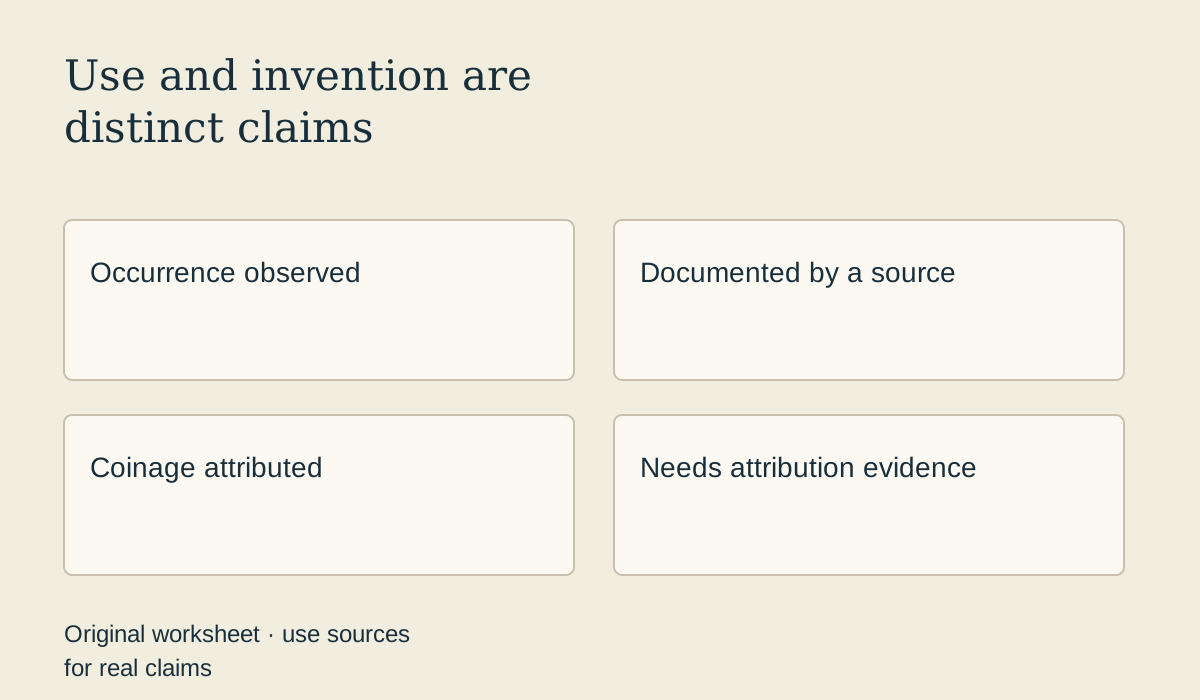
- Occurrence observed
- Documented by a source
- Coinage attributed
- Needs attribution evidence
Why “the oldest word” needs a scope
Before comparing ages, define the task. Are you looking for the earliest record of a current English word, an old written form in a particular language, or a reconstructed ancestral form? These are different comparisons. A surviving text and a reconstruction are different kinds of evidence.
Merriam-Webster’s etymology notes explain its use of an asterisk for an assumed or reconstructed form. A reconstruction should retain that marker and its explanation. Do not give it the visual treatment of a photographed manuscript quotation.
This guide does not crown one word as the world’s oldest. A responsible answer needs a language, an evidence type and a definition of what counts as the same word. If your question is about a particular current word, its own entry and cited forms give a more useful starting point.
Build a date record you can inspect
Keep these original fields for every occurrence:
| Field | Example of the question it answers |
|---|---|
| Target language and form | Which word is being dated? |
| Sense in context | Does this occurrence answer my question? |
| Source document | Where is the form visible? |
| Document date | What dates this actual passage or edition? |
| Entry’s date statement | What does the dictionary currently report? |
| Limit | Have I checked the original or only a reference? |
You can then write a short conclusion: “The cited entry records this sense by the stated date; I have not established its first spoken use.” If you have inspected a candidate earlier occurrence, describe that record separately and explain your interpretation.
Continue the history beyond the first date
A first date is an entry point, rather than the whole story. It does not tell you how widespread a word became, which communities used it or how its senses developed. Those questions need further evidence.
Read how word meanings change to compare senses and how to research a word origin to build a fuller source trail. If a date claim accompanies a colourful invention story, check folk etymology and word-origin myths before repeating it.
Word Says Hi generated readings may suggest dates worth checking. They do not verify the dates. Use a dictionary’s own explanation of its labels and preserve the difference between a recorded occurrence, a proposed ancestor and a documented coinage.
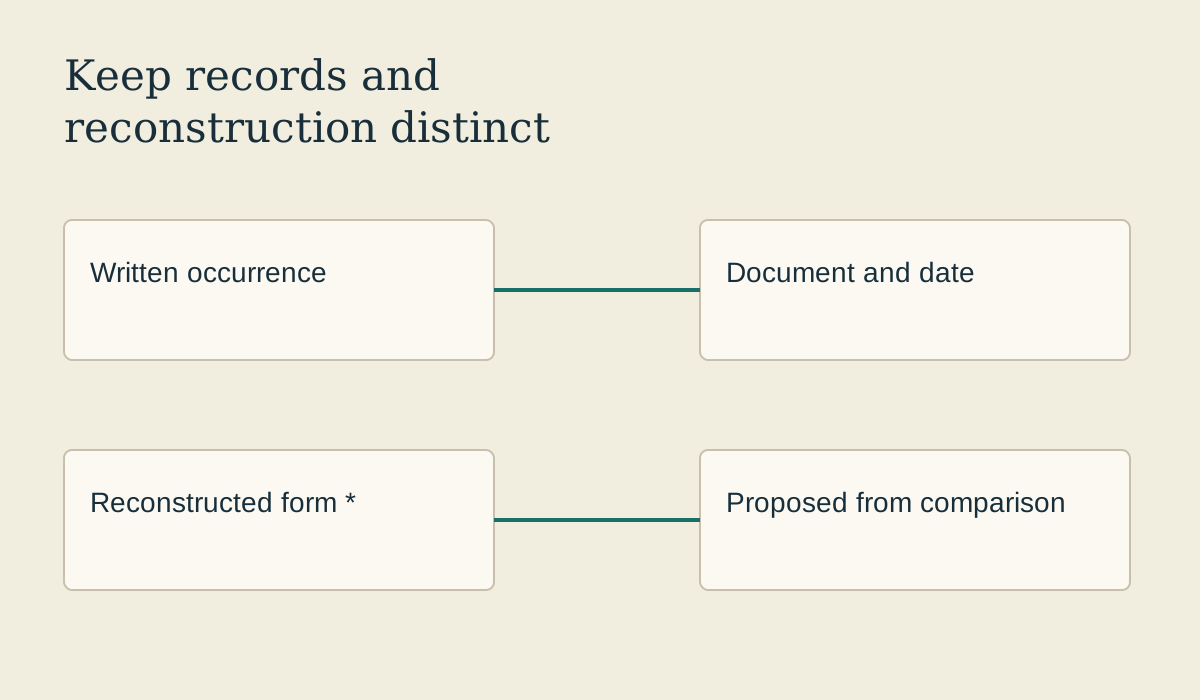
- Written occurrence
- Document and date
- Reconstructed form *
- Proposed from comparison
Sources and further reading
- Merriam-Webster: first known use dates — meaning, scope and revisability of the publisher’s dates.
- Merriam-Webster: etymologies — reconstruction notation.
- Merriam-Webster: serendipity and orange — specific, concise examples.
- University of Waterloo: Shakespeare’s earliest OED citations — the evidence distinction; no current word counts used.
- Library of Congress: Chronicling America — historical newspaper collection and scope.
The evidence-record workflow is original editorial guidance. Sources consulted 28 September 2026.