
There is also a useful distinction in the term folk etymology. Linguists use it for a process in which speakers reshape an unfamiliar word to resemble familiar elements. People also use the phrase loosely for a mistaken origin story. This guide keeps the process and the story separate.
Folk etymology can be a real language process
Merriam-Webster’s guide to word formation describes folk etymology as alteration of a word toward more familiar words or elements. The process can be part of a supported etymology. It does not mean that the resulting word is illegitimate or that its users should be corrected.
The dictionary entry for cockroach supplies a compact example: it identifies folk etymology from Spanish cucaracha. The apparent English elements do not establish the earlier source. Follow the entry for the forms and its explanation. This recorded reshaping is different from inventing a modern tale about where an unchanged word began.
Our teaching figure shows “unfamiliar element” beside “familiar element,” with a connector labelled “reshaping reported by the source.” It illustrates the type of process. It does not imply that every apparent compound was formed this way.
An origin myth is a claim without enough support
An unsupported story may sound plausible because it supplies a person, a setting and a satisfying explanation. Those details are also claims to check. Ask where the earliest account appears and whether it gives evidence that connects the event to the word.
The words “origin unknown” can be the most accurate conclusion. Merriam-Webster’s explanatory discussion explains that the label can reflect insufficient support for competing proposals. Preserve that limit. Replacing it with your favourite theory creates certainty the reference does not provide.
For your own note, use “reported story,” “source supplied” and “claim checked” as separate states. A story with a link has reached the second state. It has reached the third only when the linked material actually supports the particular claim.
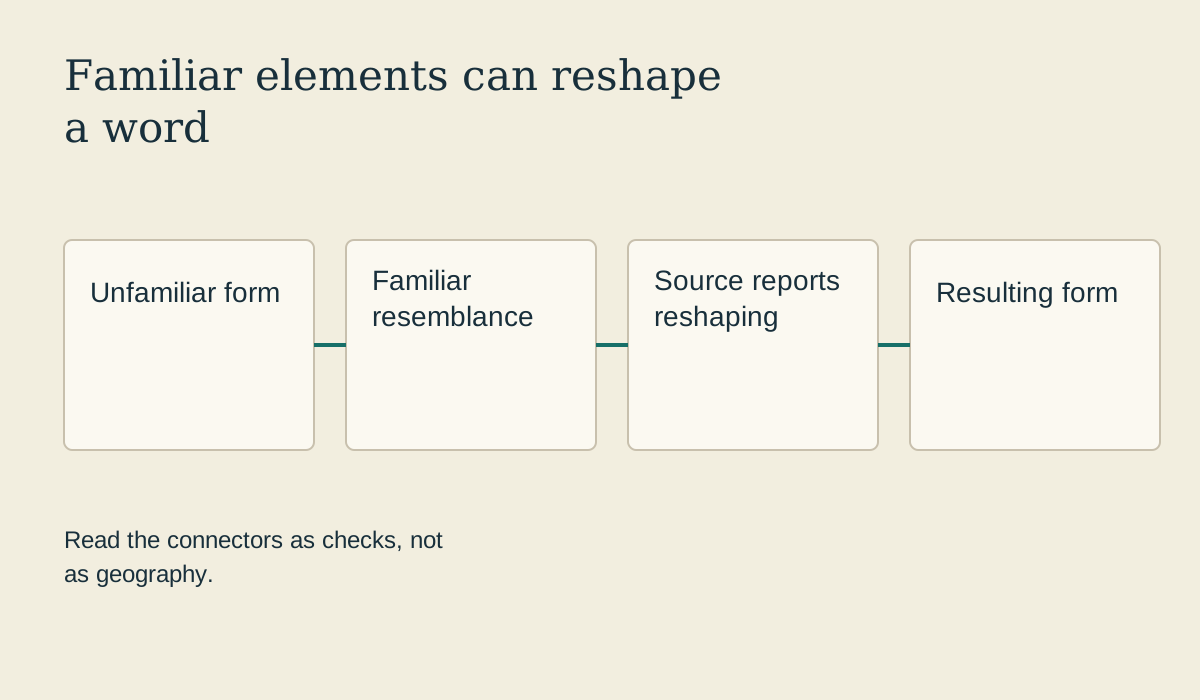
- Unfamiliar form
- Familiar resemblance
- Source reports reshaping
- Resulting form
Check acronym explanations letter by letter, then historically
Acronyms are a real way of forming words. But a phrase that can be arranged to fit the letters may have been invented later. The historical question is whether evidence connects that phrase with the word’s formation.
The popular “port out, starboard home” explanation of posh is addressed in Merriam-Webster’s article on posh. Its account does not establish that attractive expansion as the origin. Keep your summary brief and use the publisher’s discussion for the detailed evidence.
For another acronym story, write down the exact phrase and its claimed date. Look for records of the phrase, the shortened form and the relationship between them. A genuine modern expansion can explain how an organization uses a name today without proving an older word was created from it.
Separate a name link from a famous anecdote
A word may be associated with a named person while the familiar anecdote remains a separate question. Check what the dictionary establishes. Does it connect the word to the person’s name? Does it also support the scene people retell?
Our sandwich example summarizes the name link in its cited Merriam-Webster entry. The short page does not require a card-table story to establish that link. If you want to investigate an anecdote, find evidence for the anecdote itself and label it separately from the word’s name source.
Use this habit for famous quotations, royal stories and accounts of accidental invention. A named person can make a story easier to remember. It does not relieve you of checking the record.
Test resemblance without letting it decide
Two forms may look alike without the proposed historical connection being established. Begin by preserving the forms and languages exactly. Then ask whether a suitable reference connects them through borrowing, shared ancestry or another process.
If the story joins words from different languages, the missing step may be the relationship between those forms. A modern gloss that sounds suggestive is not enough. Loanwords, cognates and false friends shows how to distinguish those questions.
Avoid giving a wrong story more space than the correction. State the claim once, explain what the evidence supports and link to the source. Repeating the colourful tale throughout the article makes it harder for a reader to remember the supported conclusion.
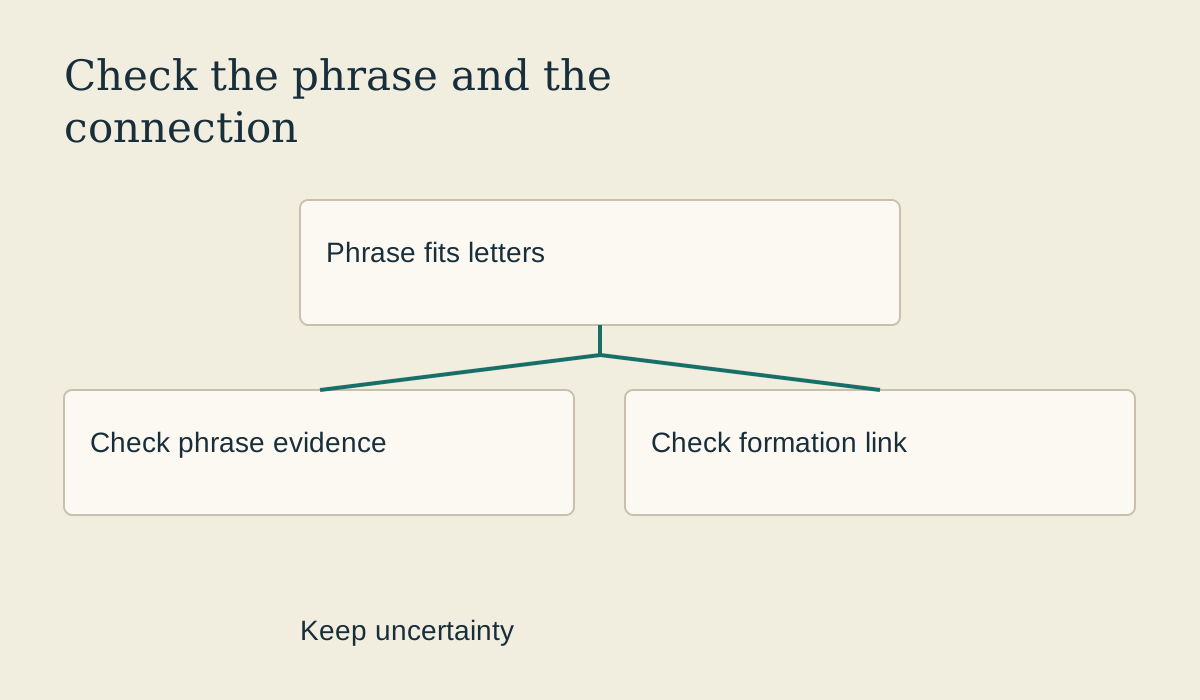
- Phrase fits letters
- Check phrase evidence
- Check formation link
- Keep uncertainty
Use a claim-check sheet
This original worksheet works for a social post, a classroom explanation or a generated reading:
| Check | What you need |
|---|---|
| Exact claim | The proposed source, event, phrase or relationship |
| Stated evidence | The entry, document or quotation offered in support |
| Chronology | Whether the evidence fits the claimed order |
| Forms and meanings | Whether the reference connects these particular words and senses |
| Source limit | What remains uncertain, disputed or uninspected |
| Shareable conclusion | A short correction or qualified account with a link |
You do not need to uncover an alternative origin to reject an unsupported argument. If the proposed phrase has not been connected to the word by the evidence you checked, say that. “I could not verify this explanation” is narrower than “No one has ever proposed it,” and usually closer to what your work establishes.
Write a correction people can follow
Lead with the supported account. For example: “This dictionary leaves the origin uncertain; the familiar acronym story is not established in its discussion.” Then link the source. Keep the reader’s next action concrete: open the entry, compare the dates or inspect the quoted document.
Avoid mocking someone for believing a good story. The useful correction gives them a way to check the next one. If the source itself is qualified, carry that qualification into your sentence. Words such as “probably” or “perhaps” are part of the claim, rather than decoration to remove for a cleaner headline.
If you are doing formal research, continue beyond the quick check. How to research a word origin offers an evidence record, while first recorded use and word invention explains why a famous early appearance does not automatically establish invention.
Keep a generated story provisional
Word Says Hi readings may contain leads about forms and meaning. They are generated starting points, rather than verified scholarship. A detailed narrative should still be checked claim by claim. The source-linked examples provide separate short histories with visible entry links.
A satisfying story and an honest gap can both be memorable. Choose the account that the evidence supports, and let the gap remain visible when the history has not been established.
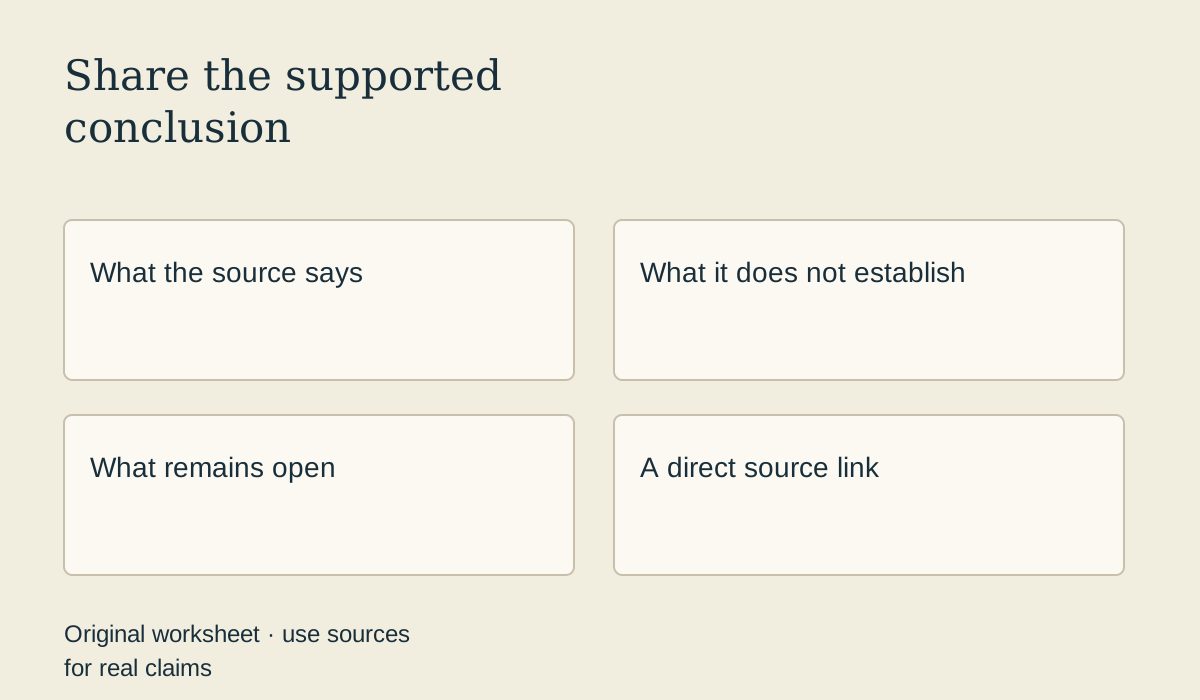
- What the source says
- What it does not establish
- What remains open
- A direct source link
Sources and further reading
- Merriam-Webster: where new words come from — actual folk etymology, acronym formation and unknown origins.
- Merriam-Webster: cockroach — the brief reshaping example.
- Merriam-Webster: posh — the popular acronym explanation and evidence limit.
- Merriam-Webster: sandwich — the specific name link, kept separate from a retold anecdote.
The checking sheet and correction workflow are original editorial guidance. Sources consulted 28 September 2026.