
This guide assumes you already have a reading in hand — or a word you are about to look up. For the full verification method, the step-by-step investigation guide walks a word from first lookup to a written conclusion; what follows is the citation half of that process: what counts, what does not, and how to write it down.
What your teacher means by “a source”
A citable source is a published thing a reader can open: a book, an article, a dictionary entry, a government page. To be useful it has to carry the pieces a citation exists to communicate — who made it, where it lives, when it appeared, and where your reader can find it. Purdue OWL’s guide to MLA electronic sources organizes exactly those elements — author, title, container, publisher, date, location — with the rule that you include the ones a source actually provides. A page that can supply none of them is a lead rather than a source.
That distinction is doing the real work in an etymology assignment. Your teacher is not grading the paragraph you produce; they are grading whether the paragraph’s claims can be traced to something checkable. The reading a lookup returns is built to point you at such things — it ends where verification begins.
Dictionaries as citable references
A dictionary entry is a good source because it is accountable. It has named editors, a named publisher, an edition and a stable URL — and, most importantly, it is built on evidence rather than on plausibility. Merriam-Webster’s account of how words enter the dictionary describes the machinery: words are added on the basis of actual usage, which editors track through a sustained “reading and marking” programme of print and online text. An etymology in such a dictionary is a compressed report on that evidence — the etymology FAQ explains that it gives what is known of a word’s history before it became the entered word.
Some dictionaries help you cite them: the Online Etymology Dictionary prints a ready MLA-style citation beneath each entry — author, entry title, site name, URL and the access date — which does most of the formatting work for you. When a reference offers its own citation line, use it rather than building the format from memory.
Why a generated reading is not a citation
A generated reading fails the source test on every axis your teacher cares about. It is not published — nobody can open it but you. It carries no verified bibliography, because the lookup’s job is to propose a route, not to prove one. And it is not stable: a second lookup of the same word may produce a differently worded account, so there is no fixed text for a reader to check. The site’s terms of use frame it the same way: a reading is a research starting point, not verified scholarship.
The right role for a reading in homework is upstream of the citation, not in the bibliography. Let it suggest the word’s route, then find the published entry that reports the same steps and cite that. The checking guide gives the full skeptic’s method for the middle step — where generated routes most often bend.
Citing an online dictionary entry (MLA basics)
MLA 9th edition treats citation as a set of principles rather than a rigid template, but the shape for an online dictionary entry is settled. For a signed reference like an Etymonline entry, the piece reads: author surname and first name, the entry’s title in quotation marks, the site’s name in italics, the publisher — omitted when it is essentially the site’s own name — a publication or update date when the page shows one, the URL, and the date you accessed it. For an unsigned reference like a Merriam-Webster entry, the entry title takes the author’s position, and any element the page genuinely lacks is simply left out.
Two OWL details worth copying exactly. First, the URL: MLA lets you drop the protocol — www.merriam-webster.com/dictionary/coffee rather than the full https:// string. Second, the access date: OWL treats it as conditional — most valuable precisely when the page shows no publication or update date — and it suits dictionary entries anyway, which are living documents that editors revise. “Accessed 1 Oct. 2026” pins your claim to the version you actually saw. For a worked example of a word’s entry trail, the site’s coffee word page lists the published references behind one word’s history with live links.
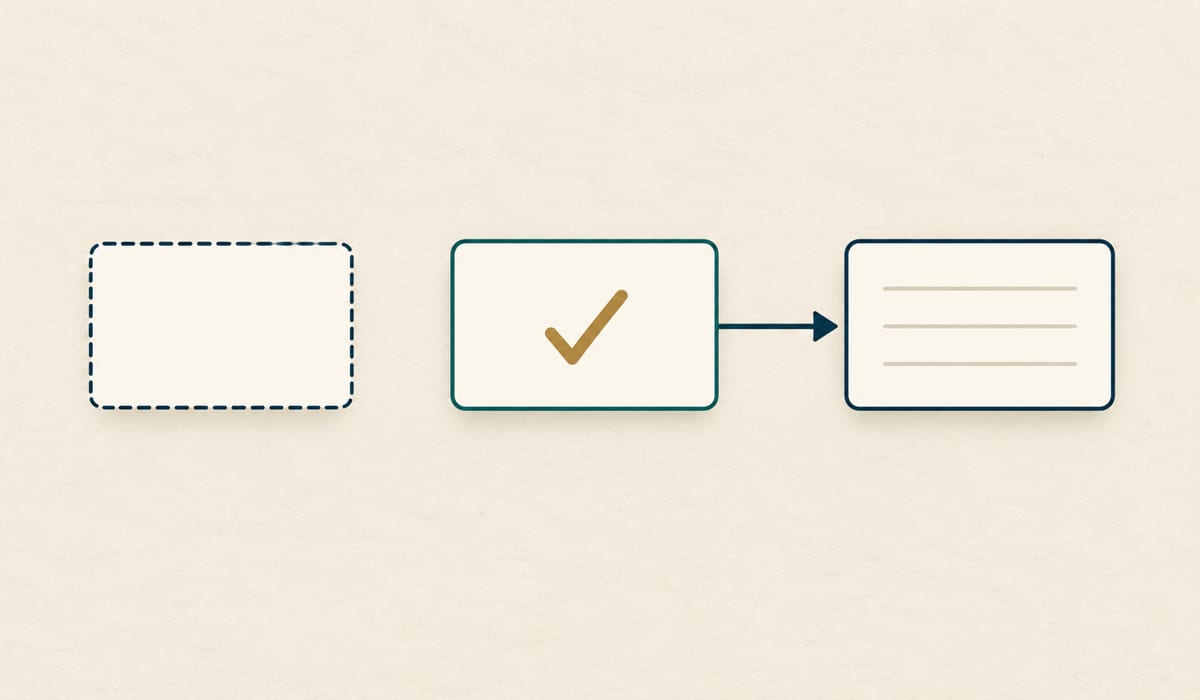
- Generated reading — a lead only
- Dictionary entry — checked against the claim
- MLA entry — what goes in the bibliography
Saying “uncertain” in an assignment
Uncertainty is a fact about the evidence, and a citation is the right place to record it — not hide it. “The dictionary dates the borrowing to the 14th century” is stronger homework than “the word began in 1300,” because it reports what a source says rather than what you would like to be true. When two references disagree — and they do — name both and cite both; the disagreements guide shows that a discrepancy is usually a difference of scope or method, not an error to silently resolve.
The same honesty applies to your own gaps. If you checked two dictionaries and could not settle a claim, write that: “Sources differ on whether the word passed through Dutch.” A conclusion that names its limits is exactly the discipline the research guide ends with — and it is the sentence most likely to earn the mark the confident guess loses.
A short checklist before you hand it in
- Word and sense pinned. You are tracing one word in one meaning — not its whole dictionary entry.
- Every claim sourced. Each date, donor language and ancestor in your prose comes from a named, linked reference you actually opened.
- Citation complete. Author or entry title, container, publisher when it differs from the site name, any publication or update date shown, URL, and an access date where the page shows no date.
- Reading used as a lead only. Nothing in the bibliography points at generated output.
- Uncertainty named. Hedges, disagreements and unverified steps are written down, not smoothed out.
Run the word through the lookup for the lead, then spend your effort where it counts — on the published entries your citation will actually stand on.
Sources and further reading
- Purdue OWL: MLA electronic sources — the works-cited elements, the URL convention and the access-date guidance used above.
- Merriam-Webster: where do new words come from? — what a dictionary etymology reports, and what it is for.
- Merriam-Webster: how do words get into the dictionary? — the usage evidence behind an entry’s authority.
- Online Etymology Dictionary: coffee — an example of the printed MLA citation line a dictionary entry carries.
The assignment checklist and the lead-versus-citation framing are original editorial guidance built on the linked sources. Source summaries are intentionally brief. Sources consulted 1 October 2026.