tea

ˈtē

One Chinese word reached English on two paths: chaa through Portuguese by way of Macao, and tea through Malay and probably Dutch from the Amoy form.

Try tea in the lookup
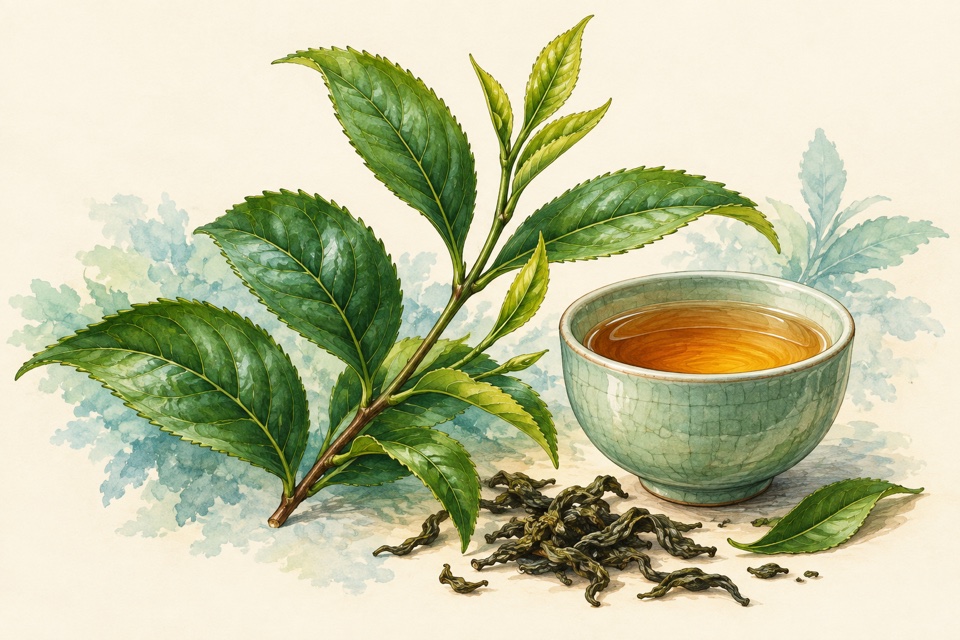
Fresh tea leaves beside a small celadon cup of amber tea.
Decorative illustration

One possible route

The sequence below follows the cited Merriam-Webster entry.

A word routeLanguage forms named in the cited Merriam-Webster entry
  1. Chinese · Xiamendéthe source form named by Merriam-Webster
  2. Englishteafirst known use (Merriam-Webster, noun sense 1b, the prepared leaves); chaa spellings from the 1590s1655

One source, many cups

Merriam-Webster gives the source of tea as a Chinese (Xiamen) form and dates the noun to 1655 — specifically sense 1b, the prepared leaves, buds and internodes used for the beverage; the Online Etymology Dictionary records earlier English chaa spellings from the 1590s and gives the road outright — Amoy-dialect t'e, corresponding to Mandarin ch'a, reached English through Malay teh and Dutch thee, the Dutch being the chief importers of the leaves into that part of Europe — while the American Heritage Dictionary hedges the Dutch step as probable.

This page summarizes the cited dictionary entries. Follow each source for its full wording, notes and references.

More from the cited entries

Word-specific details from the linked dictionaries, with the dictionary named beside each claim.

Tea and chai: one word, two roads

English first knew the word as chaa in the 1590s — also cha, tcha, chia, cia — from Portuguese cha by way of Macao, from Mandarin ch'a. The form that became modern tea is the Online Etymology Dictionary's later line: Dutch thee, from Malay teh, directly from Amoy-dialect t'e.

The same split explains chai. Russian chai, Persian cha, Greek tsai, Arabic shay and Turkish çay all travelled overland from the Mandarin form, while French thé, Spanish te and German Tee follow the Dutch sea route. Etymonline dates English chai to 1908, from the Russian or Arabic word — the same Chinese word arriving by a different road, now used especially of spiced teas.
It used to rhyme with obey

The early spellings — tay, thea, tey, tee — matched an early sound. The Online Etymology Dictionary notes tea was first pronounced to rhyme with obey and pay, with the modern pronunciation predominating only from the mid-18th century.

The American Heritage Dictionary's word history has the proof printed: Alexander Pope's 1714 Rape of the Lock rhymes “tea” with “obey.” The same change reached the words pronounced with a Middle English long-a — many other -ea- vowels had been shortened in the 1500s and 1600s, as in dead and sweat — and break, great and steak are the notable holdouts.

Dates worth keeping apart

The drink predates the English word's settled form: the Dutch East India Company was importing from 1610, tea was known in Paris by 1635, and drinking it reached England by 1644 — all per the Online Etymology Dictionary. The word was extended to the tea plant itself by the 1660s, and the “late afternoon meal” sense is dated 1738.

Merriam-Webster's own entry stops at naming the Chinese (Xiamen) source form; the Dutch and Malay links come from the other two cited dictionaries, which is why this page keeps the provenance of each step attached.

Keep following words

Continue with another source-linked example.

All ten examples